


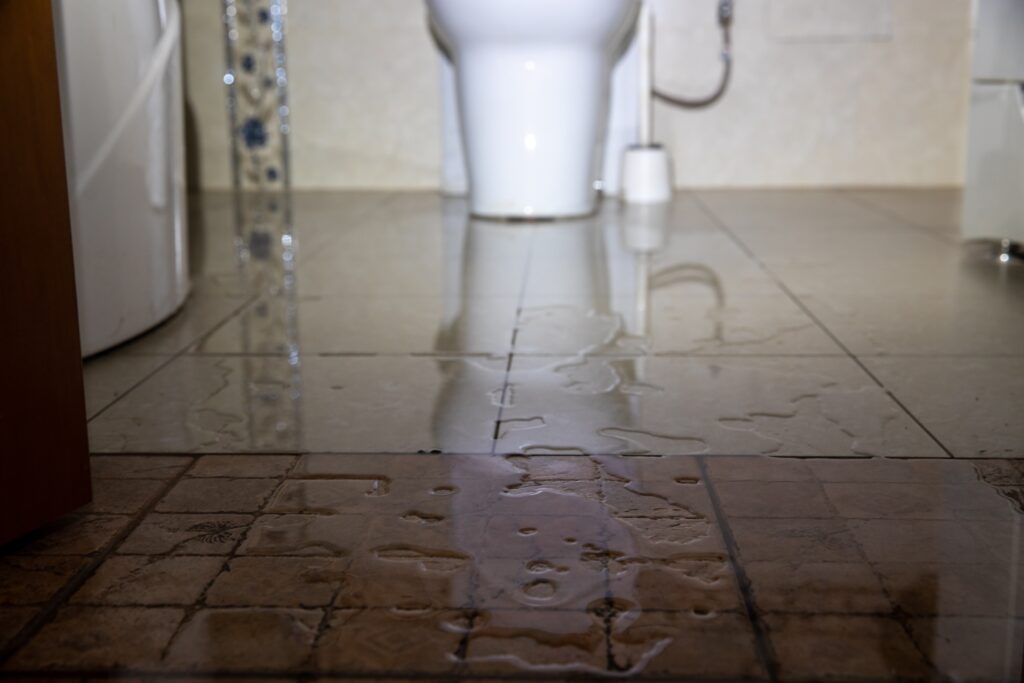
We don’t think much about our toilets until something goes wrong. Then suddenly it has our full attention. Maybe you walked in and found a small puddle at the base, or maybe there’s a faint hissing sound that never quite stops. Whatever brought you here, take a breath. Most toilet leaks are common, and almost all of them have a clear cause (and a clear fix.)
Why Is My Toilet Leaking? And What Should I Do About It?
Where a toilet leaks tells you almost everything about what’s wrong and how to fix it. So that’s how we’ll tackle this. In this blog we’ll help you pinpoint the source, walk through the likely causes, and show you what to do next.
First, Is It a Leak or Just Condensation?
Before you start replacing parts, rule out the most common false alarm. Sometimes what looks like a leak is just your toilet sweating.
Here’s why it happens. The water inside your tank is cold. Your bathroom air is often warm and humid. When the two meet at the surface of the porcelain, condensation forms on the outside of the tank. That moisture drips down to the floor and pools around the base. It looks exactly like a leak, but nothing is actually broken.
There’s a simple way to tell the difference. Dry the entire toilet and the floor around it with a towel. Then watch. If beads of water slowly form across the whole outside of the tank without you flushing, that’s condensation. If water shows up at the base only after a flush, or collects under the tank, you have a real leak.
Condensation is annoying but harmless to your plumbing. You can ease it with a tank insulation kit, better bathroom ventilation, or an anti-sweat valve. If you’ve ruled out sweating and the water keeps coming back, it’s time to find the real source.
How to Find Where Your Toilet Is Leaking
You don’t need fancy tools to track down a toilet leak. You just need to look in the right order. Here are three quick tests that point you to the culprit, so you know exactly what you’re dealing with.
The Dry-and-Flush Test
Wipe the whole toilet and the floor completely dry. Then flush and watch closely. Water at the base only when you flush usually means a problem with the seal underneath. Water under the tank points to a tank issue. Water that shows up before you even flush usually means the supply line.
The Paper Towel Trace
Lay a few strips of dry tissue along the supply line, the shut-off valve, the bolts under the tank, and around the base. Give it a little time. The first strip to get damp is sitting right next to your leak.
The Dye Test
Drop a little dark food coloring into the tank, then walk away for about fifteen to twenty minutes. Don’t flush. If colored water shows up in the bowl, you have an internal leak. We’ll come back to this one a little later.
Once you know where the water is coming from, the fix gets a lot simpler. Let’s go location by location.
Why Your Toilet Is Leaking at the Base
A leak at the base of the toilet is the one you don’t want to ignore. It tends to show up right after you flush, and that water is dirty water from the bowl. That makes it both a sanitation problem and a threat to your floor, your subfloor, and even the ceiling of the room below.
If you see water pooling around the bottom of your toilet, stop using it for now and shut off the water supply. Then figure out which of these is causing it.
A Worn or Failed Wax Ring
This is the number one cause of a toilet leaking at the base. The wax ring sits between the bottom of your toilet and the floor drain. Its whole job is to seal that connection so water and sewer gas can’t escape.
Wax rings don’t last forever. Most are good for twenty to thirty years, though they can fail sooner if the toilet rocks or was installed poorly. Once the seal breaks down, water sneaks out every time you flush. Replacing it means lifting the toilet off the floor, fitting a fresh ring, and resetting everything so it seals correctly. That’s heavier and messier work than it sounds, and it’s usually a job for a plumber.
Loose or Corroded Closet Bolts
Look at the base of your toilet and you’ll see two bolts, usually hidden under little plastic caps. These are the closet bolts, sometimes called tee bolts. They hold the toilet down and keep it pressed firmly against the wax ring.
When those bolts loosen, the toilet starts to rock. That rocking breaks the wax seal and lets water out. If the bolts are simply loose, this is one of the few things you can safely try yourself. Pop off the caps and tighten them gently, a little at a time, alternating side to side. Go easy though. Too much force will crack the porcelain. If the bolts just spin in place, or tightening doesn’t stop the leak, the seal underneath has likely failed and you’ll want a plumber to reset it.
A Damaged or Misaligned Flange
The flange is the fitting that connects your toilet to the drainpipe in the floor. If it’s cracked, corroded, or sitting at the wrong height, the seal won’t hold no matter how good your wax ring is. Flange problems are usually a job for a plumber, since the fix can range from a simple repair to a full replacement.
A Cracked Toilet Base
Sometimes the porcelain itself is the problem. Even a thin hairline crack in the base can let out a slow, steady leak that’s hard to spot. Cracks like this usually can’t be patched safely. If the base is cracked, the toilet typically needs to be replaced.
When the Water Is Coming From Higher Up
Here’s a sneaky one. Sometimes a base leak isn’t a base leak at all. Water from a loose supply line, leaky tank bolts, or plain old condensation can run down the toilet and pool at the bottom. That’s why those tests from earlier matter. Dry everything, then watch where the very first drop appears before you assume the worst.
What Fixing a Base Leak Involves
Sealing a base leak the right way usually means shutting off the water, draining the toilet, lifting it off the floor, replacing the wax ring and any corroded bolts, then resetting and re-sealing it so it sits perfectly flat. It’s bigger and messier than most people expect, and a sloppy reset just causes another leak down the road. For most homeowners, this is the point to bring in a plumber, especially if rotted subflooring or a cracked flange turns up once the toilet is lifted.
Why Your Toilet Is Leaking From the Tank
A tank leak shows up as water beneath or behind the tank, or as water quietly slipping from the tank into the bowl. The first kind makes a puddle. The second kind is silent, and we’ll cover it in the next section. For now, let’s look at the leaks that reach the floor.
A Worn Tank-to-Bowl Gasket
On a two-piece toilet, a large rubber gasket seals the spot where the tank meets the bowl. It’s sometimes called the spud washer. When it wears out, water leaks from right where the tank sits on the bowl. Replacing it means taking the tank off the bowl, which is more than a quick fix. A plumber can swap the gasket and hardware and reseat the tank so it stays sealed.
Loose or Corroded Tank Bolts
The bolts that hold the tank to the bowl use rubber washers to keep things watertight. Over time those washers wear down or the bolts corrode, and you’ll see drips coming from under the tank. If they’re only slightly loose, you can try snugging them gently, alternating sides, but go easy. Cranking them down cracks porcelain. If the drip continues, the washers have worn out and the bolt kit needs replacing, which is quick work for a plumber.
A Faulty Fill Valve
The fill valve refills the tank after each flush. If it doesn’t shut off properly, the tank can overfill and push water out through the overflow tube or leak around the valve where it meets the tank. Adjusting the float so the valve shuts off at the right level is a simple thing to check first. If it still won’t seal, the fill valve itself needs replacing. The part is inexpensive, but if you’re not comfortable working inside the tank, a plumber can handle it fast.
A Loose Supply Connection
Where the water line enters the bottom of the tank, the connection can work itself loose or crack with age. Gently tightening the nut sometimes does the trick. If the line itself is worn, it needs replacing with a new braided supply line, or a plumber can check the connection and valve while they’re there.
A Cracked Tank
Just like the base, the tank can develop hairline cracks. A cracked tank generally can’t be repaired reliably. In most cases it means replacing the tank or the whole toilet, which is something a plumber can size up and handle for you.
Most tank leaks come down to small worn parts like washers, gaskets, and valves, which are inexpensive to replace. A cracked tank is the costly exception. If you’re not sure which part is which, our guide to the parts of a toilet breaks it all down.
Silent Toilet Leaks (When Water Sneaks Into the Bowl)
This is the leak that doesn’t leave a puddle. Instead, water slips from the tank into the bowl, and the only sign is a slow climb in your water bill.
Two parts usually cause it. The first is the flapper, the rubber piece at the bottom of the tank that lifts when you flush and seals when you’re done. When it warps or wears out, it stops sealing and water trickles through. The second is a fill valve or float set too high, which lets water spill into the overflow tube without stopping. You might hear a faint trickle, or notice the tank refilling on its own now and then. People sometimes call that a phantom flush.
Remember the dye test? This is where it shines. Add food coloring to the tank, wait, and if the bowl turns colored, your flapper or flush valve is leaking.
Don’t shrug this one off just because there’s no mess. Toilets are the single biggest source of indoor water leaks, and a silent one can waste a startling amount of water every day. The upside is that this is often the simplest leak to deal with. A worn flapper is inexpensive, and swapping it is one of the few repairs most homeowners can manage on their own. If the fill valve is the culprit, a plumber can replace it quickly.
Leaks From the Supply Line or Shut-Off Valve
The supply line is the hose that runs from the shut-off valve on the wall to the fill valve in your tank. Both the line and the valve can leak from age, water pressure, or a little vibration over the years.
The giveaway here is timing and location. If water shows up before you flush, or collects near the wall connection instead of under the bowl, the supply line is a likely suspect. Gently tightening the compression nut sometimes stops the drip. If the braided line is worn, it should be replaced, and it’s an inexpensive part. A shut-off valve that won’t seal is trickier and is usually a plumber’s job.
Is a Leaking Toilet an Emergency?
It depends on the leak. A leak at the base is the one to take seriously. That’s dirty bowl water reaching your floor, and it’s actively damaging your subfloor with every flush. Stop using that toilet and shut off the water until it’s fixed. Water pooling fast, or a cracked tank or bowl, should also be treated as urgent. A silent internal leak isn’t a safety hazard. It won’t flood anything. But it does waste water and money, so don’t let it drag on for months.
Expert Tip: Need to shut off the water? Find the valve on the wall behind the toilet and turn it clockwise until it stops. If the valve is stuck or there isn’t one, shut off the main water supply to your home instead.
How Much Does It Cost to Fix a Leaking Toilet?
The cost comes down to what’s actually leaking. Small worn parts sit at the low end. The price climbs when porcelain is cracked or water has reached your floor. Here’s a rough sense of where each repair lands.
| Repair | Relative cost |
|---|---|
| Flapper or fill valve | $ |
| Supply line | $ to $$ |
| Tank bolts or tank-to-bowl gasket | $$ |
| Wax ring, including lifting and resetting the toilet | $$ |
| Cracked tank or bowl, or hidden water damage | $$$ |
What You Can Try, and When to Call a Plumber
A few toilet leaks are simple enough to look at yourself. Most are better left to a professional. Here’s our honest take.
It’s reasonable to try a couple of things on your own first. You can run the tests above to find the source, gently tighten a loose bolt or connection, or swap a worn flapper. These are low-risk and don’t involve taking the toilet apart.
Beyond that, it’s worth calling a plumber. Replacing a wax ring, removing a tank, repairing a flange, handling cracked porcelain, or chasing a leak that keeps coming back all take the right tools and a bit of experience. A rushed repair tends to lead to another leak, or to water damage you won’t notice until it’s expensive. A plumber can also pinpoint the real source the first time, so you’re not guessing or buying parts you don’t need.
There’s no shame in picking up the phone. Often the fastest and cleanest fix is the one you don’t do yourself.
How to Prevent Toilet Leaks Going Forward
A little upkeep goes a long way. These quick habits help you avoid leaks before they start.
Check for wobble every few months. If your toilet rocks even slightly, have it looked at before the movement breaks the wax seal. Glance around the base now and then for moisture, staining, or a musty smell that hints at a slow leak. Swap the flapper every year or two, since it wears out and is easy to replace. Skip the drop-in bleach tablets, because they corrode flappers and seals faster than you’d think. And caulk around the base, leaving a small gap at the back so you’ll spot a future leak instead of hiding it.
Dealing with a toilet leak you’d rather not tackle? Swapping a flapper is one thing. But once a leak means pulling the toilet, replacing a wax ring, or chasing water you can’t quite find, it’s worth calling someone who does this every day. The team at Maplewood Plumbing can pinpoint the source fast and seal it up right the first time. Reach out for a quote and we’ll take it from there.
Frequently Asked Questions
Why is my toilet leaking from the bottom when I flush?
Almost always a failed wax ring or loose closet bolts. The pressure from flushing forces water past the broken seal, which is why you only see it when the toilet is in use.
Can I still use a toilet that’s leaking at the base?
It’s best not to. That’s unsanitary bowl water reaching your floor, and it’s damaging your subfloor a little more with each flush. Shut off the water and hold off until it’s repaired.
Why is there water under my toilet tank?
Usually a worn tank-to-bowl gasket, loose tank bolts and washers, or a loose supply connection. It isn’t always a crack, so the simpler, more common causes are worth ruling out first.
Is a leaking toilet an emergency?
A fast or dirty-water leak, yes. A silent internal leak isn’t dangerous, but it wastes water and money, so fix it soon.
How do I know if it’s a leak or just condensation?
Dry everything and watch. Even moisture across the outside of the tank with no flush means condensation. Water that returns at the base or under the tank means a real leak.
How much does it cost to fix a leaking toilet?
It depends on the cause. A worn flapper or valve is a minor, low-cost fix. A wax ring replacement is a moderate job, and a cracked toilet or water damage lands at the higher end. A plumber can give you an exact quote once they see the leak.
Comments are closed