

Choosing between PEX and copper piping is one of the biggest decisions homeowners face during a repipe or new plumbing installation. Both are code-approved, reliable materials, but they differ in cost, durability, and how they hold up under St. Louis’s water and weather conditions. In this guide, we’ll walk through everything you need to know about PEX vs copper piping, from installation and lifespan to water quality and cost, so you can decide with confidence which pipe belongs in your home.
What Are PEX and Copper Pipes?
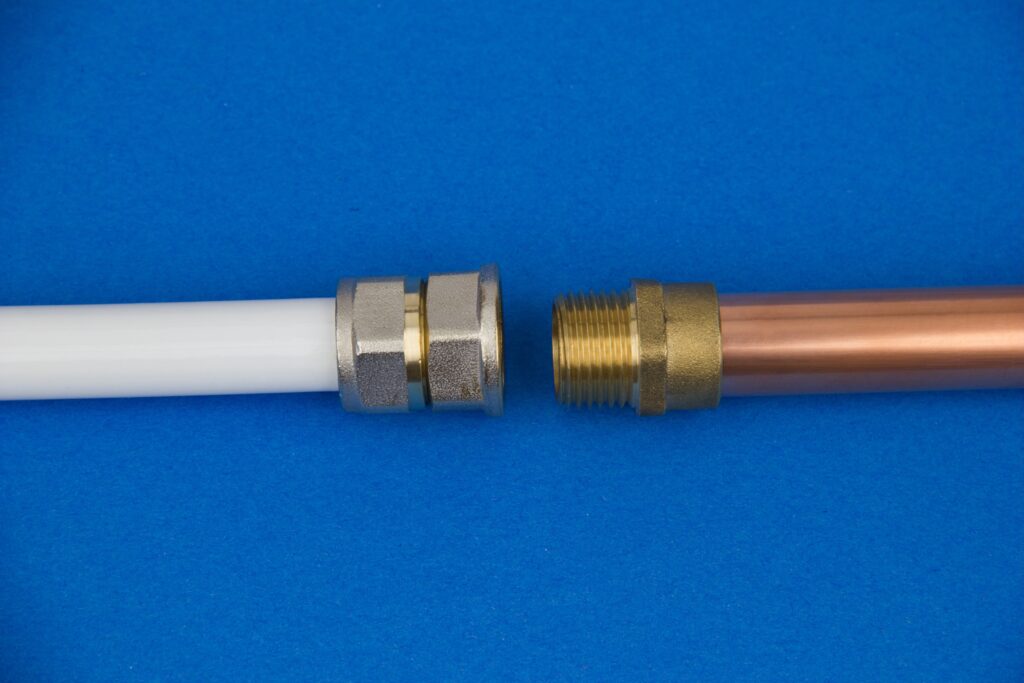
PEX stands for cross-linked polyethylene, which is a flexible plastic tubing that has become the dominant choice for residential plumbing in new construction and re-piping over the last two decades. Because PEX is manufactured by cross-linking polymer chains, it handles temperature swings well and bends around corners without extra fittings. These are typically seen in two main varieties, PEX-A and PEX-B, which differ slightly in flexibility and how they’re joined, but both perform well as main supply lines or branch lines to fixtures like a kitchen sink or water heater.
Copper pipes, on the other hand, are rigid copper tubing that has been the standard in residential plumbing for generations. Copper is prized for its strength, natural resistance to corrosion and bacterial growth, and long track record. Many homes built in the mid-20th century still have their original copper systems in service. It’s a heavier, more rigid material that requires more fittings and labor to route through walls and tight spaces, but that rigidity also helps it withstand higher temperatures and open exposure over decades.
Cost Comparison: PEX vs Copper
Material cost alone tells only part of the story. Copper cost has climbed substantially in recent years and now typically runs $2 to $4 per foot for the pipe alone, compared to roughly $0.50 to $2 per foot for PEX tubing, though those numbers shift with the market and pipe diameter. The gap is even bigger in labor costs. Copper requires soldering each joint, which means more time on the job, more fittings at every turn, and often two plumbers working together to hold pipe steady while the joint is sweated. PEX connects with crimp rings, clamp rings, or push-fit fittings, and its flexibility lets a single run snake through framing with far fewer joints and potential leak points.
For a typical home repipe, that difference adds up. Homeowners can generally expect to pay less overall for a full PEX pipe installation than a comparable copper pipe replacement, primarily because of the labor savings rather than the pipe itself. If cost is your biggest concern for your next plumbing project, it’s usually the first factor that tips the decision toward PEX, especially in homes where extensive wall openings would drive labor costs even higher.
Durability and Lifespan
Both materials are built to last, but they fail differently and for different reasons. Copper pipes typically last 50 years or more, and their most common failure point is pinhole leaks caused by corrosion. This is often a slow process that can be accelerated by acidic water or naturally hard water, both of which show up in parts of the St. Louis area depending on your water source. PEX systems are generally rated for 40 to 50 years as well, but their vulnerability is different. PEX is sensitive to UV exposure, so it needs proper insulation and should never be left exposed for outdoor use in an attic or crawlspace.
With our freeze-thaw winters, PEX has an edge in unconditioned spaces. Unlike rigid copper, PEX expands slightly under pressure, which gives it more tolerance for a hard freeze without splitting. However, no pipe is freeze-proof, and both materials still need proper installation in cold climates.
St. Louis adds a couple of local wrinkles worth knowing. Older homes in the area, particularly those that still have galvanized pipe in parts of the system, are more prone to corrosion that can accelerate pinhole leaks in adjacent copper sections. Working with an experienced, local plumber for galvanized pipe replacement lowers the likelihood of encountering leaks and water damage to your home.
Installation Process: PEX vs Copper
The physical process of installing each material looks very different on a job site. Copper requires soldering. Essentially, a plumber cuts the pipe to length, cleans and fluxes each joint, then uses an open flame to melt solder into the connection. It’s a precise process that demands rigid, straight runs and a fitting at every turn, elbow, or wall penetration.
PEX lines install with crimp rings, clamp rings, or push-fit connections, with no flame, soldering, or waiting for joints to cool. Because PEX is flexible, a single run can go continuously from the manifold to a fixture, bending around obstacles instead of requiring an elbow fitting at every turn. That means fewer fittings, fewer potential leak points, and a faster, less invasive installation, making it a real advantage in retrofit work where walls and ceilings need to stay closed as much as possible. For homeowners weighing PEX pipe installation as part of a larger renovation, less demolition, less mess, and a shorter timeline are often the deciding factors.
Heat and Fire Resistance
Copper’s biggest advantage shows up near heat sources. Rigid copper can handle higher temperatures than PEX without softening or failure, which is why it remains the required material in certain high-heat applications and why many plumbers still prefer copper for the first few feet of pipe directly off a water heater. PEX is rated for standard hot water use, but it does have a lower maximum temperature threshold than copper, and local plumbing code may require a short section of rigid pipe near appliances that produce higher heat.
In practice, this rarely rules PEX out for a whole-home repipe. It simply means a qualified plumber will typically pair PEX main supply lines with a short transition to copper near the water heater or furnace to stay code-compliant and keep everything safely within its temperature range.
Water Quality and Taste
Both materials are approved for drinking water, but each interacts with water slightly differently. Copper resists bacterial growth exceptionally well, which is one reason it’s remained a trusted choice for so long, but in homes with acidic water, copper can leach small amounts into the water supply over time (more concerning in older systems than new installations). Local water in the St. Louis area is generally on the harder side, which can actually help form a protective mineral layer inside copper pipe over time and slow this process.
PEX doesn’t corrode and won’t develop pinhole leaks the way copper can, but it has drawn scrutiny over potential chemical leaching, particularly in new PEX pipe during the first several uses. Most municipal water tested from PEX systems shows that any trace compounds dissipate quickly with normal use. Neither material carries the lead risk of old lead or galvanized pipe still found in some pre-1980s St. Louis homes, which is one of the strongest arguments for replacing galvanized pipe regardless of what you replace it with.
Which Pipe is Best For Your Situation?
There’s no universal right answer. The best material depends on where the pipe is going and what the space allows. PEX is often the better fit for repiping and retrofit work where walls stay closed. Its flexibility, lower labor costs, and fewer fittings make for a faster, less invasive plumbing project, and its quiet operation is a nice bonus for pipes running near living spaces. Copper still makes sense in exposed mechanical rooms, near high-heat appliances, or anywhere local code specifically calls for rigid copper.
Cost is also part of the equation. Copper’s rising material cost and higher labor costs make full copper repipes more expensive for most homeowners, while a PEX-based water line replacement or plumbing stack replacement often delivers comparable performance for meaningfully less. A licensed plumber can walk you through this decision based on your home, water conditions, and budget before any work begins.
Trust Maplewood Plumbing for Your Pipe Replacement
Whichever material you choose, the pipe is only half the equation; proper installation determines whether your new plumbing lasts as long as it should. Poor soldering technique, under-supported PEX lines, or corner-cutting on fittings can undercut even the best pipe on the market, while a properly installed system, PEX or copper, will give you decades of trouble-free service.
Maplewood Plumbing’s team has installed both PEX and copper systems throughout St. Louis homes for years, and we’ll help you weigh cost, durability, and your home’s specific layout before recommending a path forward. Whether you’re dealing with aging galvanized pipe, planning a full repipe, or just want a second opinion on your options, our residential plumbing services cover it all.
Ready to talk through your options? Schedule a plumbing consultation, and we’ll help you choose the right pipe for your home and budget. Call today at (314)645-6350.
Comments are closed