


The most common signs of a gas leak are a rotten egg smell, a hissing sound near a gas line or appliance, and dead or dying plants above an underground gas line. Damaged piping, an unexplained jump in gas use, and flu-like symptoms that ease outdoors can also point to a problem.
If you smell gas, don’t investigate. Leave right away and call your gas company’s emergency line or 911 from a safe distance. Many of these warning signs can have other causes, so treat them as a reason to get professional help, not as proof of a leak.
Signs of a Gas Leak: Rotten Egg or Sulfur Smell
Natural gas has no smell on its own. Gas companies add an odorant called mercaptan, which gives it a distinct rotten egg odor, so a leak is easy to notice. You’re most likely to smell gas near a gas range, water heater, furnace, or meter. The odor can travel, though, so where you notice it isn’t always the leak location.
Never assume a faint rotten egg smell will clear up on its own. Get everyone outside without flipping light switches or using your phone indoors, then call the gas company. Once they’ve made your home safe, our professional gas leak detection service uses modern tools to find the source and determine whether your gas lines need repair.
Hearing Hissing or Whistling Near a Gas Line
A cracked pipe, loose connections, or a failed valve can let pressurized gas escape with a hissing sound or faint whistle. Listen near the gas meter, exposed piping, and the connections behind your gas appliances. The sound is often easiest to hear at night or when the house is quiet.
If you hear it, don’t move closer or try to tighten a fitting. As with a gas smell, get out first and call from outside. After the gas company addresses the immediate danger, a licensed plumber can find the damaged gas line and handle any natural gas pipe repairs your system needs.
Outdoor Gas Leak Signs: Dead or Dying Grass
A leak in an underground gas line can push oxygen out of the surrounding soil and starve plant roots. Watch for a strip of yellow, wilted, or dying plants that follows the path of a buried line while the rest of your yard stays green. Bubbling in puddles, dirt blowing from the ground, or a rotten egg odor near the soil are stronger clues.
This sign develops slowly, so a periodic walk around your yard is worthwhile. If something looks off, don’t dig near the line, and always call 811 before any digging project. Contact the gas company, then schedule a natural gas line inspection to check the line on your property.
Damaged Gas Pipes: Rust, Cracks, or Loose Connections
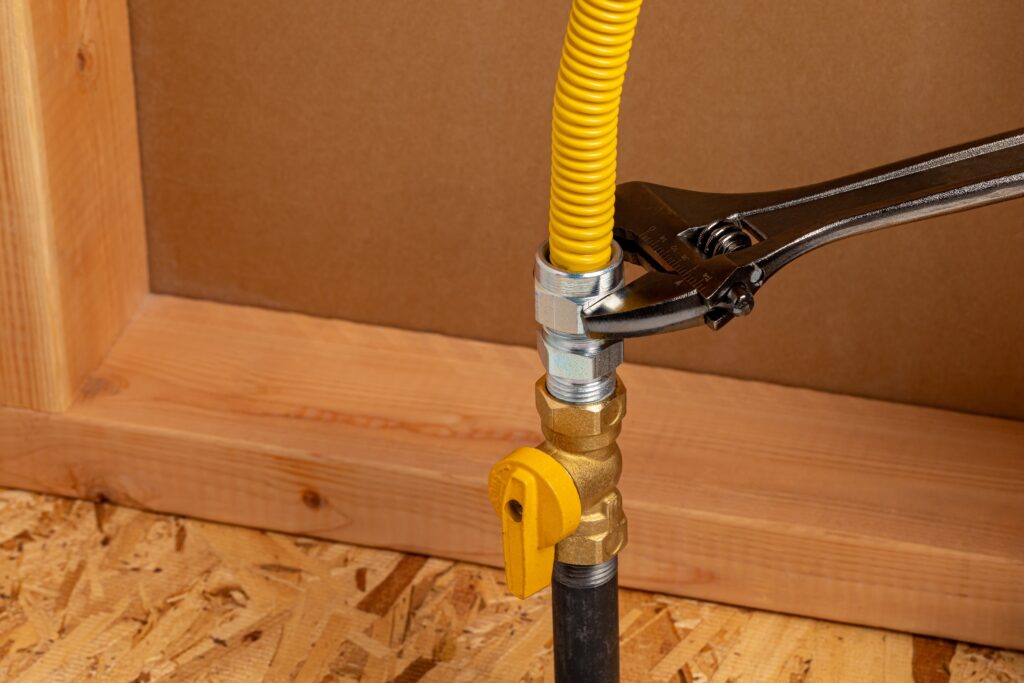
Exposed gas pipe often shows wear before a leak starts. Check visible piping near your meter, water heater, and furnace for heavy rust, dents, cracks, peeling paint, or loose connections. Some older homes still have outdated piping, such as galvanized steel, which can corrode over time. Most modern gas lines use black iron.
Never tape or seal a damaged pipe, and don’t attempt DIY gas line repair. A licensed plumber can evaluate the damaged piping and pipe material, then recommend a targeted repair or pipe replacement. Catching gas line problems early is often the more cost-effective option. If a new line makes more sense, our gas pipe installation team handles the work, including any required pressure test and local permitting.
Can a Gas Leak Cause a Higher Gas Bill?
Yes. A slow gas line leak can waste gas around the clock, even when your appliances are off. If your bill jumps unexpectedly, compare your usage, not just the dollar amount, against last month and the same month last year. Rate changes and colder weather can raise a bill too, but higher usage with no change in your habits is worth a closer look.
Don’t write off an unexplained spike. Having your lines checked can rule out a hidden leak before it leads to additional repairs. Our gas pipe services cover inspection, leak detection, and gas line repair, so you get answers and a fix from one team.
Gas Stove Warning Signs: Yellow or Orange Flames
A healthy gas range burner has a steady blue flame. A large, flickering yellow or orange flame usually signals incomplete combustion. That can come from a dirty burner, an air-to-gas mixture problem, or an issue with the gas supply to the appliance. A pilot light on your water heater or heating system that keeps going out deserves the same attention.
Incomplete combustion can produce carbon monoxide, so stop using the appliance and have it checked instead of relighting the pilot again and again. If the problem traces back to the connection, or you’re installing a new gas range, our gas line to range services make sure your appliance is connected safely.
Gas Leak Symptoms: Headaches, Dizziness, and Nausea
Breathing in leaking gas, especially in a closed-up room, can cause flu-like symptoms: headaches, dizziness, nausea, fatigue, and irritated eyes or throat. A telling pattern is when everyone in the house feels worse indoors and better after stepping outside. Pets that suddenly seem lethargic or houseplants that decline for no clear reason can be additional clues.
These same symptoms can come from carbon monoxide, which has no smell, so don’t wait for a rotten egg odor to confirm the problem. Get everyone into fresh air, call 911, and seek medical care. A working carbon monoxide detector on every level of your home adds another layer of safety.
What to Do If You Suspect a Gas Leak
Keep these gas leak safety tips in mind whenever you notice the common signs of a leak:
- Leave right away. Take everyone, including pets, with you.
- Avoid sparks. Don’t use light switches, appliances, garage door openers, lighters, or your phone until you’re outside and away from the home. Don’t stop to find the leak or close the main gas valve.
- Call from a safe distance. Contact your gas company’s emergency line or 911. In the St. Louis area, Spire’s gas emergency number is 800-887-4173.
- Wait for the all-clear. Stay out until responders say it’s safe to return.
Once the danger has passed, call a licensed plumber for emergency gas line repairs on your side of the meter. A DIY fix on a damaged gas line can lead to future leaks, property damage, or worse.
Noticed any of these warning signs? If you smell gas right now, get outside and call your gas company or 911 first. Once it’s safe, call Maplewood Plumbing at 314-645-6350 to schedule service. Our licensed plumbers will find the leak location and handle gas leak repairs with the proper tools.
Comments are closed