


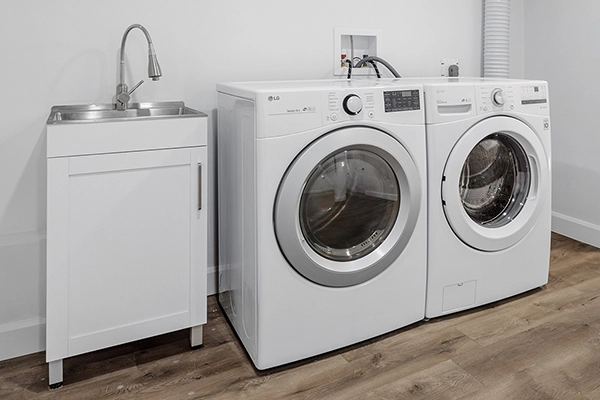
You’re in another room when the washing machine finishes filling, and suddenly, BANG. It’s loud enough that you think something fell over. A minute later, it happens again. The pipes shake. The floor thuds. You stand there wondering what’s wrong.
What you just heard is called water hammer, also known as hydraulic shock. It’s one of the most common complaints in residential plumbing, and while the noise is annoying, the bigger issue is what’s happening inside your pipes.
What Is Water Hammer?
Water hammer is a pressure surge, or shock wave, that happens when fast-moving water is suddenly forced to stop or change direction inside a pipe.
Here’s the physics in plain terms. Water has momentum. When you shut a valve, you’re stopping that momentum instantly. The water doesn’t just politely park at the closed valve. It compresses against it like a car hitting a wall, then rebounds back through the pipe as a pressure wave.
Think of pulling a rubber band tight and letting go: the band snaps back hard. Water does the same thing, except it bounces that shock wave back and forth through your pipes until the energy dissipates. That bouncing is what you hear as banging.
Water hammer happens in both residential and industrial systems. Homeowners usually hear it first because their pipes are often near finished walls where sound travels. In commercial buildings, it’s usually felt as equipment damage long before anyone complains about noise.
A few things make it worse: high water velocity, long straight pipe runs, large elevation changes in the system, and high supply pressure. The faster the water is moving and the more of it there is, the bigger the shock wave when something stops it.
Signs and Symptoms of Water Hammer
The banging is the obvious symptom, but water hammer shows up in other ways too.
Check for any of these:
- Loud banging or thumping right after a valve closes (the classic sign)
- Softer thumps or pipe vibration, especially with plastic pipe like PEX or CPVC, often mistaken for “house settling”
- Visible pipe movement or jerking when water stops
- Recurring leaks at joints or fittings with no obvious cause
- Mounting straps or brackets that keep loosening no matter how many times you tighten them
- Appliance shut-off valves that fail prematurely or start dripping
- In severe cases, pinhole leaks in supply lines, split pipes, or ruined fill valves on toilets and appliances
Plastic pipe systems hammer too. They’re just quieter about it. PEX absorbs some of the shock because it flexes, which is why people often assume their PEX home doesn’t have water hammer. The noise is muffled, but the pressure spike is still damaging fittings over time.
What Causes Water Hammer?
Here are the most common causes, ordered roughly by how often we see them:
Fast-closing valves
This is the #1 cause in modern homes. Solenoid valves on washing machines and dishwashers can close in as little as 30 milliseconds, which is faster than you could ever shut a faucet by hand. High-efficiency washers are especially prone because their valves cycle more frequently. If your water hammer started right after a new appliance install, this is almost certainly why.
Waterlogged air chambers
Many older homes were built with capped vertical pipe stubs behind fixtures, designed to cushion pressure surges with trapped air. It’s a clever solution, but it has an expiration date. Over the years, water slowly saturates that air pocket, and once it does, the chamber stops working. If your home is 20 or more years old and water hammer started up recently, waterlogged air chambers are the likely culprit.
High supply pressure
Normal residential water pressure should sit between 40 and 60 psi. Anything above 80 psi dramatically increases water hammer risk and actually exceeds most plumbing code limits. This is the single most overlooked cause. Homeowners install arrestor after arrestor and still have hammer, because the underlying pressure is 95 psi and no arrestor is going to fix that. Measuring your pressure is the cheapest, fastest test you can run, and it tells you immediately whether you’re chasing the right problem.
Loose or unsecured pipes
A pressure surge that would be inaudible in properly strapped pipes turns into a banging disaster in pipes that can move. If your pipes are knocking against wall studs, joists, or each other, you’ve got mechanical noise layered right on top of the hydraulic shock, and the two amplify each other.
Worn shut-off or stop valves
Old valves with loose packing or worn washers actually make water hammer worse, because they can’t fully control flow at closure. Replacing a worn valve is often a better long-term solution than adding an arrestor to compensate for it.
Trapped air in the system
This usually shows up after recent plumbing work, water main repairs, or any time a system was shut down and refilled too quickly. Air pockets create resonance as water flows past them, and the result can sound a lot like water hammer.
Quarter-turn valves closed too fast
Ball valves on outdoor spigots, main shutoffs, and some appliance stops can trigger hammer if you snap them closed. When you can, close them slowly.
Toilet fill valves
Older ballcock-style fill valves slap shut at the end of the fill cycle, and that slap can rattle your whole system. If your water hammer is specifically happening during toilet refilling, a modern fill valve replacement is usually the fix.
Well and booster pump systems
Sudden pump shutdowns create hammer, and these systems typically need an arrestor or expansion tank installed near the pump discharge to handle it.
Industrial causes
For commercial facilities, the list looks different: swing check valves in vertical pipe runs, sudden pump trips, improperly sized check valves, and fast-closing solenoid or motor-operated valves. Different problem class, different solutions.
Why Water Hammer Matters: Understanding The Damage It Causes
It’s tempting to think, ‘It’s just noise. If I can live with it, why bother fixing it?’
But the problem isn’t the noise itself.
Every time your washing machine shuts off and creates that bang, it sends a pressure spike rippling through your entire plumbing system. One spike? Harmless. But consider what’s actually happening: your washing machine cycles 3 to 5 times per wash, hammering at each cycle, running multiple loads per week. That adds up to thousands of pressure shocks per year, stressing every joint, fitting, and valve in their path.
At first, the damage is subtle: fittings gradually loosen, pipe supports vibrate themselves loose, appliance fill valves wear out faster than they should. Dishwashers and washing machines take it especially hard because their internal solenoid valves weren’t designed to absorb shocks coming from the supply side.
Given enough time, though, those thousands of small impacts lead to the expensive failures, like leaks at soldered joints, pipes splitting inside walls, burst appliance hoses (one of the top causes of home flood insurance claims), failed water heaters, and hidden water damage that breeds mold and rot in places you can’t see until the destruction is already done.
One bang isn’t a crisis. But a decade of bangs? That’s how pipes eventually fail.
How to Diagnose Water Hammer
Before any fix is attempted, it’s worth figuring out what’s actually causing the hammer. This is where most homeowners skip a step and pay for it. If any of the following steps feels outside your comfort zone, the team at Maplewood Plumbing can handle the full diagnosis for you.
Step 1: Confirm it’s actually water hammer
The noise should happen right when a valve closes and stop within a second or two. If you hear continuous banging, groaning, or hissing that doesn’t tie to a valve closing, you may have a different problem, such as air in lines, thermal expansion, or loose ductwork. Water hammer is tied to valve events.
Step 2: Identify which fixture triggers it
Run each water-using appliance and fixture one at a time and listen. Does it only happen with the washer? The dishwasher? Every toilet? A specific faucet? Pin down the trigger before assuming anything.
Step 3: Measure your water pressure
This is the critical step everyone skips. A hose-bib pressure gauge (available at any hardware store for under $15) screws onto an outdoor spigot. Open the spigot and read the pressure. If you’re reading over 80 psi, pressure is your real problem. No amount of arrestors will fully fix high-pressure hammer. You need a pressure-reducing valve (PRV) at the main, which is a job for a licensed plumber.
Step 4: Trace the sound carefully
The bang often appears to come from one location but originates elsewhere in the pipe run. A loose pipe in a wall cavity will sound exactly like it’s coming from the valve you just closed. Follow the pipe run visually in basements, crawlspaces, and behind appliances, and look for anything loose, unsupported, or pressed against framing.
Step 5: Check for unsecured supply lines
Exposed pipes in unfinished spaces should be strapped at regular intervals. Pipes that can move freely will amplify any hammer coming through the system.
Once you’ve worked through these five steps, you’ll have a much clearer sense of what’s going on. That matters, because the fix for high pressure is different from the fix for loose pipes, and the fix for a fast-closing valve is different from both. If the diagnosis points to anything inside walls, at the main supply, or beyond a simple appliance connection, that’s the point you call a professional.
How to Fix Water Hammer: Match the Cause to the Solution
Now, here’s the matching table. Find your cause and match it to the corresponding fix. Some of these are straightforward tasks. Others require a licensed plumber.
| If the cause is… | The right fix is… |
|---|---|
| Waterlogged air chambers | Drain and refill the plumbing system (homeowner-friendly, about 30 minutes) |
| Fast-closing appliance valves | Install water hammer arrestors at that fixture ($15 to $30 each; plumber recommended for correct sizing and install) |
| High supply pressure (over 80 psi) | Install a pressure-reducing valve at the main (plumber, $250 to $500+) |
| Loose or unsecured pipes | Add or tighten pipe straps (use matching metals; plumber for anything inside walls) |
| Worn shut-off or stop valves | Replace the valve (plumber recommended) |
| No air cushioning device at all | Install arrestors at washer, dishwasher, icemaker (plumber recommended) |
| Trapped air from recent work | Bleed the system by opening all fixtures in sequence |
Below are step-by-step instructions for the most common fixes. For anything beyond these, it’s best to call a plumber.
Drain and refill to reset waterlogged air chambers
If your home has air chambers (most homes built before the early 2000s) and hammer came on gradually over time, try this first:
- Shut off the main water supply to the house.
- Open the highest faucet in the home, usually an upstairs tub or shower.
- Open the lowest faucet, usually a basement utility sink or an outdoor spigot. Let everything drain fully.
- Flush every toilet until the tanks are empty.
- Once the system is fully drained, close the lowest faucet and turn the main water back on.
- Let each fixture run until the water flows clear and steady.
When the pipes refill, air gets pushed back into the empty chambers, restoring the cushion. If water hammer returns within a few weeks, the chambers have failed and it’s time to have arrestors installed. That’s a job we recommend leaving to a plumber so the arrestors are sized, placed, and connected correctly.
Install a water hammer arrestor
Arrestors screw onto the shut-off valve behind the offending appliance. Washing machines and dishwashers are the most common application. While a tee-style arrestor on a washing machine is a (sometimes) manageable project, sizing mistakes and cross-threaded connections are common enough that we generally recommend professional installation, especially if you have multiple fixtures affected.
However, for readers who want to try and tackle a washing machine arrestor themselves, here’s what you need to know:
- Identify your pipe type (PEX, CPVC, copper, threaded, compression, or push-fit) and buy the matching connection.
- Turn off the water at the fixture’s shut-off valve.
- Disconnect the supply line. Keep a bucket and towel ready, since there will be water in the line.
- Hand-thread the arrestor onto the shut-off. Use a tee fitting if you’re installing on a line that needs to continue to the appliance.
- Reconnect the supply line to the arrestor, then to the appliance.
- Wrench-tighten each connection snug, not cranked. Over-tightening splits the threads.
- Restore water and run the appliance through a cycle. Check every connection for leaks.
If you see any sign of a leak, or if the hammer persists, call Maplewood Plumbing. Arrestors have to be correctly sized for the fixture and the supply pressure, and it’s common for the first attempt to undersize them.
Secure loose pipes
If your diagnostic walkthrough found pipes banging against framing in an accessible space (basement, utility room, exposed crawlspace), adding or tightening straps is a reasonable homeowner task:
- Use cushioned pipe straps at the intervals your local plumbing code specifies, usually every 6 to 10 feet for horizontal runs and at every floor for vertical.
- Match the metals. Never use galvanized steel straps on copper pipes. The dissimilar metals cause electrolysis that corrodes the pipe. Use copper or plastic straps on copper; use steel straps on steel.
- Add foam pipe insulation where pipes pass through framing. It cushions any residual movement and doubles as freeze protection.
For pipes inside finished walls or ceilings, this is a plumber job. Opening drywall to access and strap pipes is not something you want to learn on your own home.
Air Chambers vs. Water Hammer Arrestors
Older houses and newer houses handle water hammer differently, and it’s worth knowing which your home has.
| Air Chamber | Water Hammer Arrestor | |
|---|---|---|
| How it works | Capped vertical pipe stub filled with air | Sealed chamber with gas-charged piston or bladder |
| Maintenance | Needs draining periodically to restore air | Maintenance-free; sealed for life |
| Failure mode | Waterlogs over time, stops working | O-ring failure (rare) |
| Cost | Low (just pipe) | $15 to $30 per arrestor |
| Install angle | Must be vertical | Any angle |
| Common in | Older homes | New construction, retrofits |
In short, modern arrestors have essentially replaced air chambers. If your home has air chambers and they’re waterlogged, a drain and refill is worth trying. If hammer returns quickly, it’s time to retrofit to arrestors, and that’s work best handled by a licensed plumber.
Different Types of Water Hammer Arrestors
Not all arrestors are the same. Here’s what’s on the market:
- Piston-type. The most common residential arrestor. A sealed gas-charged chamber with a sliding piston that absorbs the shock. Examples include Oatey Quiet Pipes and Sioux Chief. Works at any installation angle.
- Diaphragm or bladder-type. A flexible membrane separates air from water. More common in commercial and industrial applications, but available for residential.
- Inline. Installs mid-run on a supply line. Usually requires cutting into the pipe, which is a plumber job.
- Mini end-stop or 90-degree tee. Screws onto a washing machine or dishwasher hose connection. The simplest option for homeowner installation, though professional install is still recommended for reliable results.
Sizing
Arrestors are sold in sizes AA through F. Size AA covers most single residential fixtures (washer, dishwasher, icemaker). Sizes A and up are for multi-fixture branches and commercial applications. When in doubt, go one size larger than you think you need, or better yet, let a plumber size it for you.
Connection types
Match your pipe when shopping: CPVC, PEX (1807 or 1960/Uponor), copper sweat or press, male iron pipe, compression, or push-fit. The arrestor won’t work if the connection doesn’t match your pipe.
When to Call for Assistance
A small number of water hammer tasks are reasonable for a handy homeowner, including draining and refilling air chambers, installing a screw-on arrestor at a washing machine, tightening accessible pipe straps, and replacing a toilet fill valve. Everything else benefits from a licensed plumber, and honestly, so do those tasks if you’d rather not spend a Saturday troubleshooting.
You should call a plumber when:
- Your water pressure reads over 80 psi. PRV installation requires cutting into the main supply.
- Hammer persists after an arrestor has been installed. Sizing may be wrong, or pipes hidden in walls need attention.
- Mid-run supply lines need arrestors that require cutting pipe.
- You see visible water damage, corrosion at joints, or active leaking.
- Your building is commercial. Code and liability make this a licensed-plumber job.
Preventing Water Hammer in New Construction or Remodels
If you’re building or remodeling, water hammer can be designed out of the system from the start. Have your plumber:
- Spec water hammer arrestors on washer, dishwasher, and ice-maker supply runs in the plans.
- Install a PRV at the main to keep residential pressure in the 40 to 60 psi range regardless of what the municipal supply delivers.
- Use proper pipe supports at code-specified intervals throughout.
- Avoid long unsupported horizontal runs where possible.
- On well or booster pump systems, install arrestors or an expansion tank near the pump discharge.
- Include isolation valves at each branch so future repairs don’t require draining the whole system.
Adding these features during construction adds modest cost. Retrofitting them later costs many times more.
Is Water Hammer an Emergency?
No, not in the way a burst pipe is. You don’t need to shut off your main water at 11 PM because your washing machine made the pipes bang.
But don’t ignore it either. The banging is the sound of cumulative damage, and it should be addressed within days or weeks, not months or years. Call a plumber urgently if you see any of these:
- Active leaking at any joint, fitting, or appliance connection
- Pipes that are visibly bulging, cracking, or split
- Hammer noise that’s getting steadily worse over a short period
- Water pressure readings above 100 psi
In any of those cases, shut off the main and get professional help fast.
Your Next Steps
If there’s one thing to take away from this article, it’s to diagnose before you buy. Measure your water pressure first. A cheap gauge is easy to find, the fastest test to run, and it rules out (or confirms) the most expensive cause.
From there, the right move is a call to a licensed plumber. Getting the diagnosis wrong means installing parts that don’t solve the problem, and every month the hammer continues is more wear on your pipes, fittings, and appliances.
If you’re in the area, request a quote from Maplewood Plumbing. We’ll measure your pressure, trace the source, and install the right fix the first time, so your plumbing is protected for the long haul.
Frequently Asked Questions
Why did my water hammer start suddenly?
Usually because something in your system changed: a new appliance with faster-closing valves, a repair elsewhere in the plumbing that introduced air, or supply pressure that crept up after municipal water main work. If it started after a specific event, that event is your clue.
Can water hammer break pipes?
Yes, over time. Individual events usually don’t, but repeated pressure spikes fatigue metal and loosen joints until something fails. Burst washing-machine supply hoses caused by chronic hammer are a leading source of home flood claims.
How long does water hammer last?
The bang itself lasts 1 to 3 seconds as the shock wave dissipates. The underlying problem lasts until you fix it. It won’t resolve on its own.
Why does my water hammer get worse after a new appliance?
Modern high-efficiency washers and dishwashers have faster solenoid valves than older models. Faster closure equals a bigger pressure spike. If a new appliance introduced hammer, an arrestor at that fixture is the right fix.
Can water hammer be fixed without cutting into the wall?
In most cases, yes. Arrestors install at the shut-off valves behind visible appliances, and pressure regulators install at the main supply without opening walls. Cutting into walls only becomes necessary if loose pipes inside wall cavities are the root cause.
Which material is more prone to water hammer, PEX or copper?
Copper is louder because it transmits sound better and doesn’t flex. PEX absorbs some of the shock through its flexibility, but the underlying pressure spike is the same, and PEX fittings can still be damaged over time. Quieter doesn’t mean safer.
Will a water hammer arrestor fix a loud toilet fill?
Sometimes. If the noise is hammer (it happens at the moment the fill valve closes), yes. If the noise is groaning or whining during the fill itself, the problem is more likely a worn or outdated fill valve. Replace that first.
Do I need an arrestor on every fixture?
No. Focus on fixtures with fast-closing valves: washing machines, dishwashers, icemakers, and sensor-operated faucets. Manual faucets close slowly enough that they rarely cause hammer.
Is water hammer covered by home warranty?
The damage it causes (burst hoses, ruptured pipes) is often covered by homeowners insurance, but the fix itself, such as installing arrestors or a PRV, is maintenance and usually your responsibility.
Why does water hammer happen only sometimes?
Pressure fluctuates. Municipal supply pressure varies by time of day and season, and demand elsewhere in your house changes how much flow is moving when a valve closes. Intermittent hammer usually means you’re near the threshold, not below it. The problem is real even when it’s not happening.
Comments are closed