

It usually starts small. The kitchen sink drains a little slower than it should. Then the shower starts pooling around your ankles. Then you flush a toilet and hear an ominous gurgle from somewhere else in the house. When more than one drain acts up at the same time, the problem usually isn’t any one fixture. Rather, it’s the main sewer line that all of them feed into. And the fastest, cheapest way for a plumber to get in there and fix it is through a part of your plumbing you’ve probably never thought about: the sewer cleanout.
Quick answer: A sewer cleanout is a capped pipe that connects directly to your home’s main sewer line and gives plumbers a direct access point to clear clogs, run a camera, and maintain the line (without pulling a toilet or digging up your yard.) It’s usually a 3- to 4-inch round or square-capped pipe found near your foundation, along the path to the street, or in your basement.
Below, we’ll cover exactly what a cleanout is, how to find yours, the different types, what it costs, and how to tell whether your cleanout is trying to warn you about a clog right now.
What is a sewer cleanout?
A sewer cleanout is a vertical pipe with a removable cap that ties directly into your home’s sewer lateral line, which is the underground pipe that carries all of your household wastewater out to the city sewer main (or your septic tank).
Think of it as a dedicated service door built into your sewer line. Instead of fishing equipment down through your toilet or breaking ground in the yard, a plumber can simply unscrew the cap and have a straight shot into the pipe.
That straight shot matters more than it sounds. Your sewer line bends, drops, and changes direction on its way out of the house. The cleanout is positioned to give clean, direct access to that line, which is why it’s the first thing a good plumber looks for when you call about a backup.
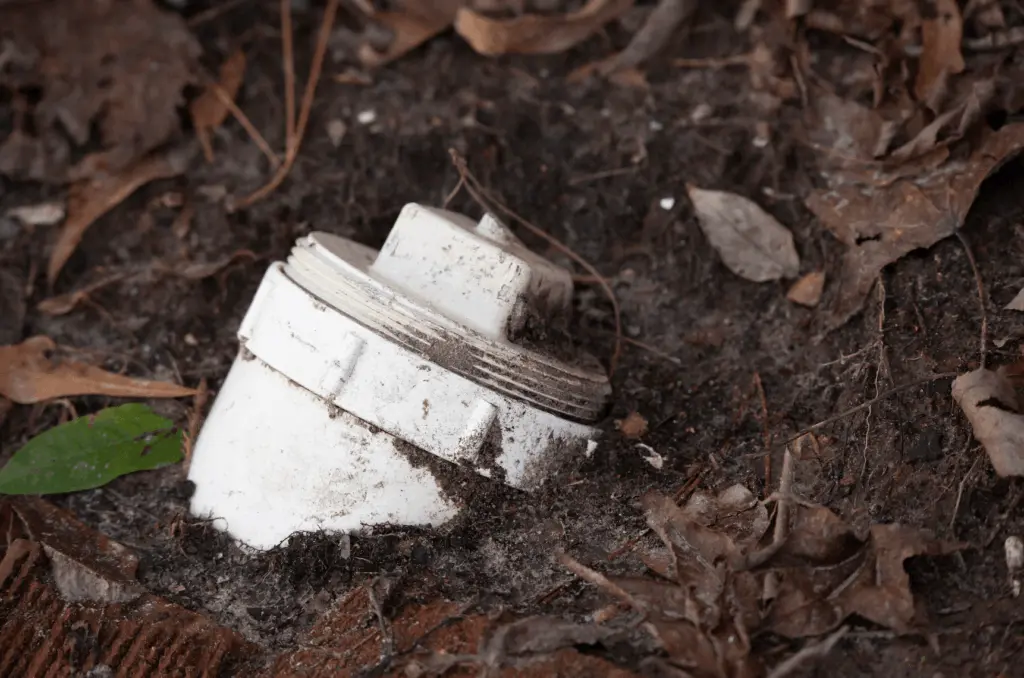
Most cleanouts are 3 or 4 inches in diameter (6 inches on larger or commercial systems), and they’re capped with a threaded plug. In newer homes the pipe and cap are usually white ABS or PVC plastic. In older homes you’ll more likely find brass or cast iron.
What is a sewer cleanout used for?
A cleanout earns its keep in four main ways:
-
Clearing main-line clogs
When a blockage forms in the main line, a plumber feeds a motorized auger (“snake”) or a high-pressure hydro-jetter through the cleanout to cut through roots, grease, or debris.
The process goes like this: carefully remove the cap (standing clear, because a backed-up line can be under pressure), feed the cable in toward the blockage, spin the cutting head to break it up, and then send a camera down to confirm the line is clear.
-
Camera inspections
A sewer camera goes right through the cleanout, letting a plumber see the inside of your line. We’re talking things like cracks, root intrusion, bellied pipe, the exact location of a clog, all with zero digging.
-
Routine maintenance
If you have your line cleaned periodically (a smart move for older homes or properties with big trees), the cleanout is what makes that quick and affordable.
-
Emergency access
When sewage is backing up, minutes matter. A cleanout lets a plumber get to the problem immediately instead of spending the first hour just trying to reach the pipe.
Where is my sewer cleanout? (How to find it)
Cleanout location depends on your home’s age, style, and especially your climate. Here’s where to look.
Outdoor cleanouts
In warmer climates, the cleanout is almost always outside. Walk the perimeter of your house, close to the foundation, and look for a capped pipe sticking up an inch or two out of the ground, often near an exterior bathroom wall, since that’s where a lot of drain lines converge. If you don’t spot it against the house, trace an imaginary line from your home toward the street or septic tank; the cleanout typically sits along that path, because it’s in line with the buried sewer line itself.
Because cleanouts don’t get used often, yours may be hiding. It’s common to find them swallowed by a shrub, buried under an inch of soil or mulch in a planting bed, or tucked inside a small ground box with a metal or plastic lid.
Indoor cleanouts
In colder climates, cleanouts are frequently indoors to protect them from freezing. Check the basement, garage floor, utility room, or crawl space. Look for a capped pipe where several drain lines come together, or a plug on an individual drainpipe. Homes on a slab foundation often have an indoor cleanout as well.
What it looks like
You’re hunting for a 3- to 4-inch pipe with a screw-off or pull-off cap and a round or square head. Newer ones are white plastic; older ones are metal and sometimes look like a flat lid or a “mushroom” cap set into the ground. Some caps are stamped “Cleanout” or “C.O.” to make them easy to spot.
What if I can’t find one?
Some homes (particularly those built before the late 1970s or early ’80s) were never fitted with an accessible cleanout. If you’ve searched and come up empty, you can trace your sewer line to narrow it down, ask the previous owner, or have a plumber locate it. If it turns out you genuinely don’t have one, installing a cleanout is always an option.
Types of sewer cleanouts
Not all cleanouts are created equal. Here’s a quick breakdown on the three main types of sewer cleanouts and how they differ from each other:
One-way cleanout
A single pipe joining the sewer line at an angle, giving access in one direction (typically toward the city main). Cheaper, but limited.
Two-way cleanout
Two pipes set side by side at opposing angles, so a plumber can run equipment both toward the street and back toward the house. This is the modern standard and the configuration most plumbers prefer. It covers every scenario from a single access point.
Indoor cleanout/test tee
A capped fitting on an interior drain stack, common in basements and on slab homes.
Many local plumbing codes now require accessible cleanouts on new construction and major sewer work, and a two-way exterior cleanout is generally the best setup you can have.
Is my cleanout telling me I have a clog?
This is the question a lot of people are really asking when drains start misbehaving. Your cleanout is one of the most reliable ways to confirm a main-line clog.
Under normal conditions, the cleanout pipe should be empty and dry inside. So:
- If you remove the cap and water is standing in the pipe (or worse, flowing up and out) you have a main-line blockage. The wastewater has nowhere to go and is backing up to the lowest available point.
- Pair that with the other classic signs: multiple drains slow at once, toilets gurgling when you run a sink or washer, a foul odor, or sewage appearing at the lowest drain in the house (often a basement floor drain).
What to do right now:
- Stop running water. No flushing, no laundry, no dishwasher. Every drop adds to the backup and the pressure.
- Shut off your main water supply if the backup is active, so no one adds to it.
- Keep people and pets away from any standing sewage. It’s a genuine biohazard.
- Call a licensed plumber who specializes in sewer work.
A quick word on doing it yourself: it’s reasonable to carefully crack the cleanout cap to check for standing water as a diagnostic, just stand to the side and expect that the line may be pressurized. But actually clearing a main-line clog is a job for a professional with the right auger or jetter.
And please don’t pour chemical drain cleaner into a main line: it almost never has the muscle to clear a real main-line blockage (usually roots or hardened grease) and the caustic chemicals just sit there eating at your pipe.
Why every home should have a sewer cleanout
- Faster, cheaper service: Direct access cuts labor time on every clog, inspection, and cleaning.
- No pulled toilets or rooftop gymnastics: The plumber goes straight to the line.
- Camera-ready: Diagnostics happen in minutes, without excavation.
- Backup protection: If your only cleanout is in the basement and the line backs up, opening that cap sends sewage straight onto your basement floor. An exterior (ideally two-way) cleanout lets a clog be diagnosed and cleared outside the house, where a spill is a hose-down instead of a disaster.
How to maintain your sewer cleanout
A cleanout is low-maintenance, but not no-maintenance:
Keep it accessible and marked
Don’t bury it under landscaping, mulch, or a new patio. A small flag or marker helps you (and your plumber) find it fast in an emergency.
Keep the cap on and intact
A missing or cracked cap lets debris and stormwater into the line and lets sewer gas out. Replace damaged caps.
Mind your trees
Roots are the number-one enemy of sewer lines. Avoid planting large trees directly over the line, and have roots cut back if they’re a known issue.
Schedule periodic cleaning
As a general guideline, having the main line professionally cleaned every 18–24 months keeps buildup in check, but this could be more often for older homes or heavy root areas.
When to call a professional
Reach out to a licensed plumber if you notice:
- Standing water or sewage in (or coming out of) the cleanout
- Several drains backing up or gurgling at the same time
- A persistent sewage smell indoors or near the cleanout outside
- A cap that’s damaged, missing, or seized on
- You can’t locate a cleanout, or suspect your home doesn’t have one
Other Frequently Asked Questions
How do I know if my sewer cleanout is clogged?
Remove the cap and look inside. The pipe should be empty. Standing water means the main line is blocked. Backed-up drains throughout the house, gurgling toilets, and sewage odor point to the same thing.
Where is the sewer cleanout usually located?
Near the foundation outside (especially in warm climates), somewhere along the path from your house to the street, or indoors in a basement, garage, or utility area in colder climates.
Can I open the sewer cleanout cap myself?
Yes, carefully. To check for standing water. Stand to the side, since a backed-up line can be pressurized. Just leave the actual clog-clearing to a pro.
How many sewer cleanouts does a house have?
Most homes have one main cleanout. Larger homes or long runs may have several. Some older homes have none.
What’s the difference between a one-way and a two-way cleanout?
A one-way gives access in a single direction, usually, toward the street. A two-way provides access in both directions (toward the street and back toward the house) which is why it’s the modern standard.
How often should I have my sewer line cleaned?
A common guideline for sewer cleaning is every 18–24 months, but homes with older pipes or nearby trees may benefit from more frequent cleaning. A plumber can recommend a schedule after a camera inspection.
Not sure where your cleanout is, or whether you even have one? Maplewood Plumbing can locate it, inspect your line with a camera, or install a new cleanout in the right spot!
Comments are closed