
Most of us don’t think much about our water heater. It sits quietly in a basement, garage, or utility closet, doing its job every time we turn on a hot tap. Until it doesn’t.
Then suddenly you’re standing in a cold shower. Or hearing strange popping sounds from the basement. Or finding a puddle of water where there definitely shouldn’t be one. And you’re left wondering what’s actually going on inside that big metal cylinder you’ve ignored for the last five years.
Here’s the thing: water heaters look mysterious from the outside, but inside they’re surprisingly straightforward. There are maybe a dozen key parts in a typical tank water heater. Once you know what each one does, troubleshooting gets a whole lot easier. You’ll know whether you’re dealing with a $30 fix or a “time to replace the whole thing” situation. You’ll know which part to check first when something seems off. And you’ll know when it’s time to put down the wrench and call in a pro.
In this guide, we’ll walk through every major part of a water heater, what it does, what tends to go wrong with it, and what you can do about it. Let’s open up that mystery box.
The Two Main Types of Water Heaters
Before we get into the parts, a quick note. Water heaters come in two main configurations. They share some parts but not all of them.
1. Tank Water Heaters
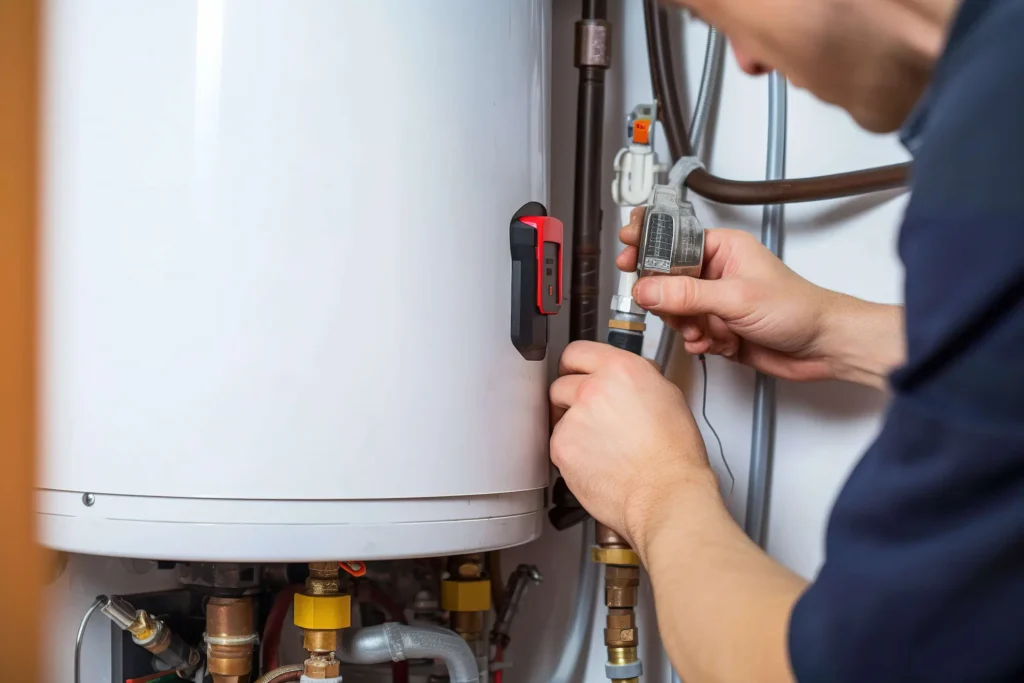
Tank water heaters are the traditional setup. A big insulated cylinder (usually 40 to 80 gallons) constantly keeps a reserve of hot water ready to go. When you turn on a hot tap, water flows out from the top of the tank, and cold water flows in at the bottom to replace it. The heater fires up periodically to keep that water hot. This is what most homes in St. Louis have.
2. Tankless Water Heaters
Tankless water heaters skip the storage tank entirely. They heat water on demand, only when you turn on a hot tap. They’re more efficient, take up less space, and theoretically never “run out” of hot water. The trade-off: they cost more upfront, and they have fewer but more complex parts.
We’ll focus mainly on tank water heaters since that’s what most homes use. Tankless parts get their own section toward the end.
All the Parts Found on Tank Water Heaters
Whether your water heater runs on gas or electricity, every tank model has the parts below.
The Tank
The big metal cylinder is, well, the tank. It holds anywhere from 30 to 80 gallons of hot water, depending on the size of your home and household.
The tank is usually made of steel with a glass, porcelain, or cement lining on the inside. The lining slows corrosion. A thick layer of insulation on the outside keeps the water hot between uses. A painted metal jacket wraps everything up to give it that familiar appearance.
The tank itself doesn’t really get repaired. When the tank fails (usually from corrosion eating through the lining and then the steel), you’re typically looking at a full water heater replacement.
Dip Tube
The dip tube is a long plastic tube that runs from the cold water inlet at the top of the tank down to the bottom. Its job is to deliver incoming cold water to the bottom of the tank where it can be heated. Without the dip tube, cold water would mix with the already-hot water at the top.
What Goes Wrong
Dip tubes can crack, break, or wear out, especially in older heaters. When this happens, cold water dumps in at the top of the tank and goes straight to your faucets. You suddenly run out of hot water way faster than you used to. If you’ve noticed lukewarm showers that weren’t lukewarm last year, a failed dip tube is a likely culprit.
Anode Rod
The anode rod is probably the most important part of your water heater that you’ve never heard of. It’s a long metal rod made of magnesium, aluminum, or aluminum/zinc. It hangs down from the top of the tank into the water.
Its job is to sacrifice itself, literally. The rod attracts corrosive minerals and oxygen ions in the water, drawing them away from the steel tank lining. As long as the anode rod is doing its job, it’s slowly being eaten away while your tank stays protected.
What Goes Wrong
Anode rods are designed to be replaced every 3 to 5 years. Once they’re fully corroded, the corrosion starts attacking the tank itself. That’s when leaks develop and replacement becomes inevitable.
Many homeowners never replace their anode rod, which is why most water heaters die at the 10 to 12 year mark instead of going 15 or 20 plus. Replace the anode rod every few years and you can dramatically extend the life of your water heater.
Side note: if your hot water smells like rotten eggs, the magnesium anode rod is often the cause. Swapping in an aluminum or aluminum/zinc rod usually fixes the smell.
Heating Mechanism
This is where gas and electric water heaters diverge. Gas heaters use a burner. Electric heaters use heating elements. We’ll cover the specifics for each type in their own sections below.
Thermostat
The thermostat monitors the temperature of the water in the tank and tells the heating mechanism when to fire up. Most water heaters are set to around 120°F by default. That’s hot enough for daily use but cool enough to avoid scalding. Some homeowners set theirs slightly higher for larger households or better dishwasher performance.
What Goes Wrong
A failed thermostat can leave you with water that’s way too hot, way too cold, or inconsistent. Electric water heaters typically have two thermostats (one for the upper heating element, one for the lower). A single failure can produce confusing symptoms like “warm water but never really hot.”
Temperature and Pressure Relief Valve (T&P Valve)
The T&P valve is your water heater’s most important safety feature. It’s a valve mounted near the top of the tank, or sometimes on the side. It’s designed to open automatically if the temperature or pressure inside the tank gets dangerously high. When it opens, hot water and steam discharge through a pipe that runs down the side of the tank to within 6 inches of the floor.
Without a working T&P valve, an overheating or overpressurized water heater could literally explode. This isn’t a hypothetical. It’s exactly what this valve is preventing.
What Goes Wrong
Sometimes T&P valves leak slowly. That usually indicates either a failing valve or, more importantly, actual overpressure in the tank that needs to be diagnosed. Other times they’re “tripped” by a real pressure event and need to be replaced rather than reset. If your T&P valve is dripping or discharging water, don’t ignore it. Call a plumber.
Drain Valve
At the bottom of the tank, you’ll find the drain valve. It’s a faucet-style spigot used to drain the tank for maintenance or replacement. Most manufacturers recommend draining a few gallons (or fully flushing the tank) once a year to remove sediment that settles at the bottom.
What Goes Wrong
Drain valves are often made of plastic on cheaper water heaters. They can crack, drip, or fail when you try to use them. If yours is leaking, replacement is usually straightforward but requires shutting off the water heater first.
Cold Water Shutoff and Inlet
The cold water shutoff is the valve on the cold water supply line that connects to your water heater. It’s the valve you’d shut off if you need to do any work on the water heater. It’s also useful if you’re heading out of town for an extended trip and want extra peace of mind.
The inlet pipe brings cold water from your home’s plumbing into the tank. From there, water travels down through the dip tube to the bottom.
Hot Water Outlet
The hot water outlet is the pipe that carries heated water out of the top of the tank and into your home’s hot water plumbing. Pretty straightforward, but worth knowing about. If you’re ever working on the heater, you’ll need to know which pipe is which.
All Parts Specific to Gas Water Heaters
Gas water heaters use combustion to heat water. That means they have a handful of parts that electric models don’t. Let’s break them down.
Gas Burner
The burner sits in a chamber at the bottom of the tank. When the thermostat calls for heat, gas flows to the burner and ignites. The flame heats the bottom of the tank and, by extension, the water above it.
What Goes Wrong
Burners can get dirty over time, especially if dust or debris accumulates in the combustion chamber. A dirty burner produces an inefficient (often yellow) flame instead of a clean blue one. That means slower heating and higher gas bills. Burners can also fail outright, though that’s less common.
Pilot Light and Ignition System
Older gas water heaters have a standing pilot light. It’s a small constantly-burning flame that ignites the main burner whenever the thermostat calls for heat. Newer heaters use electronic ignition, which sparks a flame only when needed. Electronic ignition is more efficient, but it has more parts that can potentially fail.
What Goes Wrong
Pilot lights go out, especially in drafty basements or after gas service interruptions. Relighting one is usually straightforward, and there are instructions printed right on the heater. But if the pilot won’t stay lit, you’re probably looking at a thermocouple problem (more on that next).
Thermocouple (or Thermopile)
The thermocouple is a small copper sensor that sits in the pilot flame. As long as it senses the flame, it sends a tiny electrical signal to the gas valve telling it to stay open. If the pilot goes out, the thermocouple stops sending that signal, and the gas valve closes automatically to prevent gas from leaking into your home.
What Goes Wrong
This is one of the most commonly replaced parts on a gas water heater. When the thermocouple wears out or gets coated with soot, it stops sensing the pilot flame properly. The gas valve closes, and the pilot won’t stay lit no matter how many times you try to relight it. Thermocouple replacement is relatively inexpensive and is a common service call.
Gas Control Valve
The gas control valve is the brain of a gas water heater. It receives signals from the thermostat and thermocouple. It controls when (and how much) gas flows to the burner. Most gas valves include a built-in temperature dial that lets you adjust the water temperature.
What Goes Wrong
Gas control valves can fail, though it’s less common than thermocouple failure. When they do fail, you’re often looking at no hot water at all, or a heater that won’t respond to temperature adjustments. Replacement requires shutting off the gas, so this one is generally a job for a licensed plumber.
Flue and Vent System
A gas water heater produces exhaust gases, including carbon monoxide. Those gases need to be vented safely out of your home. The flue is a tube that runs up through the center of the tank, drawing exhaust gases up and out through a vent pipe in your roof or sidewall.
Different gas heaters have different venting setups:
- Standard atmospheric vent: relies on natural draft
- Power vent: uses a small fan to push exhaust out a sidewall
- Direct vent: uses two pipes to bring in combustion air and expel exhaust
What Goes Wrong
Vent issues can be serious. A blocked or corroded vent can cause carbon monoxide to back up into your home. That’s why every home with a gas water heater should have working CO detectors. If you ever smell exhaust, see soot near the heater, or hear unusual sounds from the vent, call a plumber immediately.
Parts Specific to Electric Water Heaters
Electric water heaters are simpler than gas models. No burner, no pilot, no venting. But they have their own components worth knowing.
Heating Elements
Electric water heaters use one or two heating elements. They’re long metal rods that screw into the side of the tank and sit submerged in the water. When the thermostat calls for heat, electricity flows through the element, which heats up and transfers that heat to the surrounding water.
Most residential electric heaters have two elements: an upper element and a lower element. The upper one heats the water near the top of the tank where hot water gets pulled out, giving you quick recovery. The lower one heats the bulk of the tank’s water.
What Goes Wrong
Heating elements wear out, especially in homes with hard water. Mineral scale builds up on the element and eventually causes it to short out. The classic symptoms: not enough hot water (lower element failed), no hot water at all (upper element failed), or running out of hot water way too fast. Replacement is moderately involved (it requires draining the tank), but it’s a common repair.
Upper and Lower Thermostats
Each heating element has its own thermostat. The upper thermostat is also typically the master control. It tells the lower thermostat when to activate and acts as a high-limit safety switch. If the water gets too hot, the upper thermostat can shut everything down.
What Goes Wrong
Thermostat failures produce some of the most confusing water heater symptoms. Water that’s way too hot, way too cold, inconsistently hot, or that runs out too quickly. These can all point to a thermostat issue. Diagnosis usually requires a multimeter.
Power Supply and Breaker
Electric water heaters require a 240-volt circuit, much higher than a standard 120-volt outlet. The power supply runs from your home’s electrical panel through a dedicated breaker to the heater.
What Goes Wrong
If your electric water heater suddenly stops working entirely, the first thing to check is the breaker. It may have tripped. Frequent tripping points to a deeper electrical problem, often a short in one of the heating elements. That’s a job for a professional.
Tankless Water Heater Parts
Tankless water heaters work differently than tank models, so they have their own set of components.
Heat Exchanger
This is the heart of a tankless system. The heat exchanger is a series of small water-filled tubes that pass through (or near) a heat source. When you turn on a hot tap, water flows through the heat exchanger and gets heated almost instantly before flowing to your faucet.
Burner (Gas Tankless) or Heating Elements (Electric Tankless)
Gas tankless models use a powerful burner positioned around the heat exchanger. Electric tankless models use heating elements similar to those in tank-style electric heaters, but designed for instant heating.
Flow Sensor
The flow sensor detects when you turn on a hot tap. It tells the system to fire up the burner or elements and start heating water on demand. This is what makes “on-demand” hot water possible.
Control Board
The brain of the operation. The control board monitors temperature, flow, and ignition. It adjusts the burner or elements to maintain consistent hot water output.
Venting (Gas Tankless)
Gas tankless heaters need venting too, though the systems are typically smaller and use sidewall venting rather than chimney venting.
Common Water Heater Problems and the Parts to Check
Now for the section that helps you actually use everything above. Here are the most common water heater symptoms and the parts most likely causing them.
No Hot Water
Gas Heater
Check the pilot light first. If it’s out and won’t stay lit, suspect the thermocouple. If the pilot is on but the burner isn’t firing, the gas control valve may have failed.
Electric Heater
Check the breaker first. If it’s tripped, reset it once. If it trips again, you likely have a failed heating element or thermostat. If the breaker is fine, suspect the upper thermostat or upper heating element.
Not Enough Hot Water (Runs Out Quickly)
A failed dip tube is one of the most common culprits. Cold water is dumping into the top of the tank instead of the bottom, so you’re mixing cold water into your hot supply immediately.
A failed lower heating element (electric) or sediment buildup (gas or electric) reduces the tank’s effective hot water capacity.
A thermostat set too low is sometimes the simplest answer. Check that your thermostat is set around 120°F.
Lukewarm Water Only
On an electric heater, this often points to the upper element working but the lower element being out. Only the top portion of the tank is getting heated.
On a gas heater, a clogged burner producing an inefficient flame can cause similar symptoms.
Rotten Egg Smell from Hot Water
This is almost always caused by a reaction between magnesium anode rods and bacteria in the water. Replacing the magnesium rod with an aluminum or aluminum/zinc rod usually solves it. If it doesn’t, your water itself may need testing for sulfur bacteria.
Discolored or Rusty Water
Rusty hot water (with cold water staying clear) points to corrosion inside your tank. Usually it’s because the anode rod is spent and the tank itself is starting to corrode. This is a sign the heater’s life is winding down.
Popping, Rumbling, or Crackling Sounds
Sediment has built up at the bottom of the tank. As the burner or lower element heats the water below that sediment layer, steam bubbles form and pop their way through. Flushing the tank can sometimes resolve this in earlier stages. In advanced cases, the sediment becomes hardened and flushing won’t fully remove it.
Water Pooling Around the Tank
It could be the drain valve (cheapest fix), the T&P valve discharging (potentially serious), the inlet or outlet connections (moderate fix), or the tank itself leaking (replacement time). Locating exactly where the water is coming from tells you what you’re dealing with.
Hot Water Doesn’t Last as Long as It Used To
This usually points to sediment buildup reducing your effective tank capacity, a partially failed heating element, or a failing dip tube. Often a combination.
Maintenance Tips That Extend Your Water Heater’s Life
A few simple things can add years to your water heater’s life.
Flush the Tank Annually
Sediment buildup is one of the biggest enemies of any water heater. Flushing a few gallons (or fully draining the tank) once a year helps remove sediment before it causes damage.
Replace the Anode Rod Every 3 to 5 Years
This is the single most impactful thing you can do for water heater longevity. Most heaters that fail at 10 to 12 years could have made it to 20 if their anode rod had been replaced regularly.
Test the T&P Valve Once a Year
Lift the lever briefly. Water should discharge through the overflow tube. If nothing happens, or if the valve sticks open afterward, replace it.
Set the Thermostat to 120°F
Higher temperatures shorten the life of the tank, increase your energy bill, and create a scalding risk. 120°F is the manufacturer-recommended setting for almost all residential heaters.
Insulate the Tank and Pipes Where Appropriate
Older tanks especially benefit from a water heater blanket. Insulating the first few feet of hot water pipe reduces heat loss too.
Check for Leaks Regularly
Walk by your water heater once a month and look for signs of pooling water, rust, or staining. Catching a slow leak early can save thousands in water damage.
Knowing When to Call the Pros
Understanding the parts of your water heater is great. But let’s be honest, this isn’t a system where you want to take guesses. Water heaters involve gas lines (combustible), 240-volt electrical (deadly), or pressurized hot water (also deadly), depending on the model. The cost of getting it wrong is much higher than the cost of getting a pro involved.
Generally speaking, you should always call a professional for:
- Thermocouple, gas valve, or burner work
- Heating element or thermostat replacement
- T&P valve replacement
- Any active leak (find the source first, then call)
- Strange sounds, smells, or visible damage
- Anything involving gas, venting, or carbon monoxide concerns
- Water heater installation or replacement
We’ve Got It From Here…
Congrats, you’ve made it through the whole guide, which means you probably know more about water heaters than most homeowners ever will. That’s genuinely useful. You’ll spot small problems before they become big ones, you’ll know what questions to ask a plumber, and you won’t get talked into a fix you don’t need.
But here’s the honest truth: some water heater jobs just aren’t worth doing yourself. Gas work is dangerous, electrical work is dangerous, and a leaking tank gets expensive fast. When you hit one of those situations, that’s when it’s time to call Maplewood Plumbing.
Maplewood Plumbing is the go-to water heater company for St. Louis homeowners. Every major brand serviced, trucks stocked with the most common replacement parts, and the kind of straight-shooting advice you can actually trust.
Comments are closed