


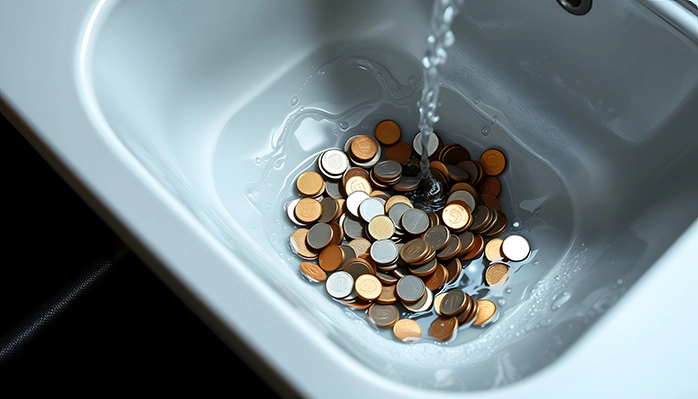
Why Is My Water Bill So High? Hidden Leaks & Other Possible Reasons
Opening your monthly water bill only to find an unexpectedly high charge can be shocking and frustrating. If you’re asking yourself “why is my water bill so high?” you’re not alone. Many homeowners face this common problem, and the causes aren’t always obvious. Keep reading to learn what’s behind your high water bill, plus how you can prevent future surprises.
5 Common Causes for High Water Bills
Let’s explore the most frequent reasons behind why your water bill is so high:
1. Hidden Plumbing Leaks
Silent leaks are often the most expensive and challenging problems to detect, quietly wasting hundreds of gallons of water while remaining completely hidden from view. These leaks include:
- Cracked or damaged pipes behind walls
- Underground pipe leaks in your yard
- Worn-out pipe joints and fittings
- Small cracks in your home’s foundation
- Deteriorating pipe seals
Other common hiding spots for leaks include worn-out pipe joints and fittings, which can develop small drips over time, and deteriorating pipe seals that slowly lose their effectiveness. Even seemingly insignificant cracks in your home’s foundation can harbor hidden leaks that contribute to water waste.
To put this in perspective, a single 1/8-inch crack in a pipe can waste an astounding 250 gallons of water per day, which is more than enough to fill a swimming pool within a couple of months.
2. Running Toilets
While a running toilet might seem like a minor nuisance, it’s actually one of the most significant sources of water waste in many homes. A properly functioning toilet should only run water briefly after flushing to refill the tank. However, when components start to fail, your toilet can quietly waste up to 200 gallons of water every day — that’s like taking over 13 extra showers every day!
Toilet issues that often result in high water bills include:
- Faulty flush valves
- Worn-out flapper seals
- Malfunctioning fill valves
- Improperly adjusted float mechanisms
- Cracked overflow tubes
Even a tiny crack in the overflow tube itself can lead to constant water waste. What’s worse, is the fact that toilet leaks are often silent, and can go unnoticed for months.
3. Dripping Faucets
A single faucet dripping at the rate of one drop per second — a drip so slow you might barely notice it — adds up to a staggering amount of wasted water over time. In just one day, such a drip wastes 8.64 gallons of water. Over a month, this increases to about 250 gallons, and across an entire year, a single dripping faucet can waste 3,000 gallons of water.
4. Irrigation System Problems
Your outdoor irrigation system can significantly impact your water bill, often in ways that aren’t immediately obvious. Underground leaks in irrigation lines can waste substantial amounts of water without showing visible signs at the surface.
These leaks often develop at joints or where pipes have been damaged by root growth or soil movement. Broken or misaligned sprinkler heads, while more visible, are frequently overlooked during routine yard maintenance. Even a single misaligned sprinkler head can waste hundreds of gallons by watering driveways or sidewalks instead of your lawn.
But here’s the kicker: even if your sprinklers are in good shape, your timer settings could be the real problem. Plenty of folks forget to tweak their sprinkler schedules when the seasons change or the weather gets wacky. Running those sprinklers during or right after a downpour? That’s a surefire way to inflate your water bill. And if you’re letting zones run too long or overlap, you’re not just wasting water — you’re drowning your grass!
5. Changes in Water Usage Patterns
Sometimes, a high water bill isn’t due to any malfunction but rather reflects changes in your household’s water consumption patterns. When new family members or long-term guests join your household, their daily activities like showering, laundry, and dishwashing naturally increase overall water usage. Similarly, installing new water-intensive appliances, such as a washing machine or dishwasher, can affect your water consumption, especially if they’re older, less efficient models.
Seasonal activities and home improvements can also drive up water usage. Recent landscaping projects often require additional watering during the establishment period for new plants and grass. Pool maintenance, including initial filling and regular top-offs due to evaporation, can consume thousands of gallons of water. Understanding these seasonal and lifestyle-related changes helps you better predict and manage your water consumption.
How To Identify the Cause of Your High Water Bill
Smart Water Meter Monitoring
One of the most reliable ways to detect hidden leaks is by carefully monitoring your water meter. Begin by ensuring all water-using appliances and fixtures in your home are turned off, including ice makers and water softeners. Jot down the number on your meter, then take a two-hour break from using any water at all. No flushing, no running faucets, and no automatic systems like sprinklers. After two hours, check the meter again. If the number has changed, bingo — you’ve got a leak.
Check Your Pipes for Signs of Damage
Take a good look at all the pipes you can see, especially around connections and joints where leaks like to hide. Check your faucet gaskets and pipe fittings for any signs of wear and tear. Don’t forget to look up — water stains or weird discoloration on your ceilings and walls could mean a hidden leak. And keep your ears open around toilets. Even a faint running sound could be a clue that you’re losing gallons of water every day.
Understanding Your Water Usage History
Your water bill can tell you a story if you know how to read it. Pull out your old bills from the same time of year and compare them to what you’re paying now. See if you can spot any big jumps that don’t make sense. Think about any changes in your home that might be bumping up your water use, like a new washing machine or an extra person living with you. And don’t forget about seasonal stuff — like watering your garden or filling up the pool — all of these can explain a temporary spike in your bill.
Don’t Let Hidden Leaks Drain Your Wallet!
High water bills can be frustrating, especially when there’s no obvious cause. The good news? You don’t have to go at it alone. Don’t waste another dollar on water that’s literally going down the drain. Schedule your leak detection appointment with a trusted plumbing company (like us) and enjoy the peace of mind that comes with knowing your water bill is under control.
Frequently Asked Questions
Quick answers about unexpected water bill increases.
Why is my water bill so high all of a sudden?
A sudden spike in your water bill almost always points to a leak or an unexpected change in water usage. Silent leaks are the most common and costly culprit — they can hide behind walls, under floors, or underground, wasting hundreds of gallons without any visible sign. Toilets are a frequent offender, since a deteriorating flapper or faulty fill valve can leak constantly without making a sound. Other possibilities include a burst or cracked pipe, a malfunctioning irrigation system, or even a change in your household like new family members or guests. If your usage hasn’t changed, it’s worth calling a plumber to check for hidden leaks.
Why is my water bill so high this month?
If this month’s bill is noticeably higher than usual, start by ruling out obvious changes; did you fill a pool, water the lawn more frequently, have extra guests, or run more loads of laundry than normal? Seasonal changes can also play a role, since summer months often bring higher water use from irrigation systems. If nothing in your routine has changed, the most likely explanation is a hidden leak. Check for running toilets by adding a few drops of food coloring to the tank and waiting 20 minutes — if color appears in the bowl, you have a leak. Also check for dripping faucets, and look for wet spots in your yard that could indicate an underground irrigation leak.
How much does a running toilet increase your water bill?
A running toilet can waste a surprising amount of water. Depending on the severity of the leak, a single running toilet can waste anywhere from several hundred to several thousand gallons of water per month. Even a slow, barely noticeable leak from a worn flapper can add up significantly over time. For context, a faucet dripping at just one drop per second wastes about 250 gallons per month and roughly 3,000 gallons per year, and a running toilet typically wastes far more than that. The good news is that replacing a faulty flapper is usually a quick, inexpensive fix.
What rooms typically cause the highest water bills?
Bathrooms are by far the biggest water consumers in most homes. Toilets alone account for roughly 27% of a household’s water usage, followed by showers at about 17%. The laundry room is the next major contributor, with washing machines making up around 21% of total use. Kitchens round out the list, with faucets and dishwashers accounting for a smaller but still meaningful percentage. Outdoors, irrigation systems can also be a major driver; especially if they’re running on outdated schedules, have leaks at pipe joints, or are watering during or right after rainfall.
Comments are closed