
What Exactly Is a P-Trap?
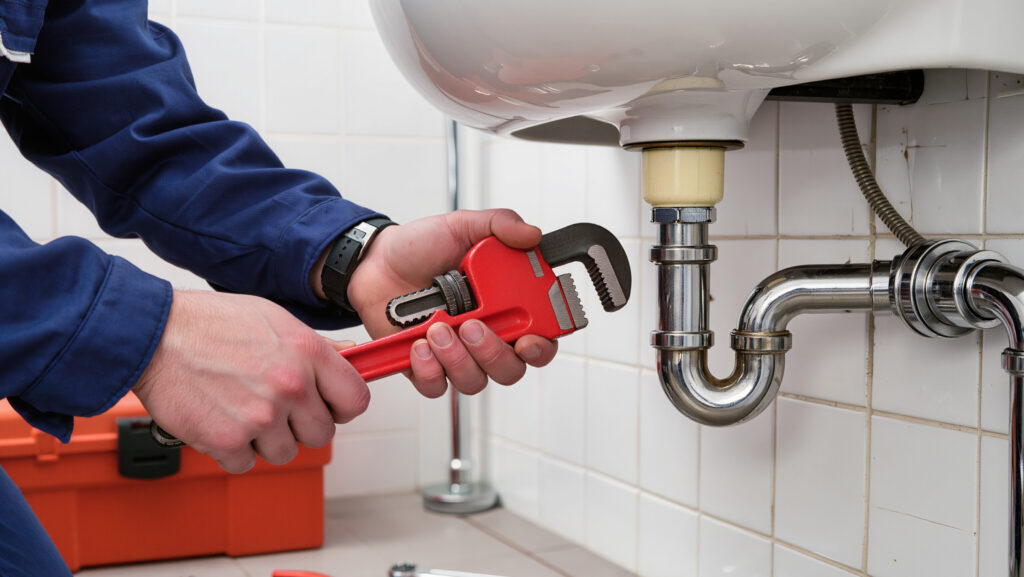
A P-trap is that U-shaped pipe bend you see under every sink, shower, and bathtub in your home. When viewed from the side, it looks like the letter P lying on its face (hence the name).
The trap holds a small amount of water in its curved section at all times, typically about 2-4 inches worth. This standing water creates an airtight seal that prevents sewer gases from flowing backward through your drains and into your home.
Every fixture that drains water needs a P-trap. Your kitchen sink has one, your bathroom sink has one, your shower has one, and even your washing machine and dishwasher connect to one. The only exception is toilets, which have their trap built into the fixture itself (that’s what creates the S-curve you see in the porcelain.)
P-traps are typically made from PVC plastic in modern homes, though you might find chrome-plated brass in visible locations for aesthetics, or cast iron in older homes.
The material doesn’t affect function much, but it does impact durability and ease of maintenance. PVC is cheap, easy to work with, and lasts practically forever.
How Does a P-Trap Actually Work?
The beauty of a P-trap is how simple it is. It’s basically just gravity and water doing what they naturally do, creating a barrier that never needs batteries, electricity, or any input from you.
Every time you run water down your drain, the water rushes through that curved section with enough force to push the old water out the other side, but it always leaves some water sitting in the bottom of the curve.
Every time you use the sink, you’re automatically refreshing that water seal. The old water gets pushed out, new water takes its place. This means the water sitting in your P-trap never gets gross and stagnant. It’s constantly being replaced without you even thinking about it.
Now, that water sitting in the trap needs to be just the right depth. Most plumbing codes require between 2 and 4 inches of water.
Why so specific?
Well, if there’s not enough water, sewer gases can actually bubble up through it. Too much water, and your sink won’t drain properly because the water has to climb too high to get out.
That’s where vent pipes come in. They let air into the system, breaking any vacuum that forms. Without them, your P-traps would get sucked dry every time you drained a bathtub upstairs. Think of it like putting your finger over a straw full of water, where the water stays in until you release the vacuum.
As a bonus feature, P-traps act like a safety net for small valuables. Drop your wedding ring while washing dishes? There’s a good chance it’s sitting right there in the P-trap. Of course, this catching ability works for less pleasant things too — hair, food scraps, soap scum all collect there.
It’s actually better that this stuff piles up in an accessible trap under your sink rather than somewhere else. The downside? Eventually all that accumulated gunk can clog the trap, but at least it’s a clog you can actually reach and fix.
Different Types of P-Traps and Where They’re Used
Standard P-Traps
These are what you’ll find under most sinks. They consist of a curved trap piece and a trap arm that connects to the wall drain. Modern versions use slip-joint connections that can be hand-tightened, making maintenance relatively easy. The standard size for bathroom sinks is 1.25 inches, while kitchen sinks typically use 1.5-inch traps.
Bottle Traps
Popular in Europe and gaining ground in modern designer bathrooms, bottle traps have a more compact, cylindrical design that takes up less space and can look more elegant when exposed. They work on the same principle but hold water in a bottle-shaped chamber rather than a U-bend. They’re easier to clean but can lose their seal more easily if not properly vented.
Drum Traps
These are obsolete and no longer meet most codes, but you might find them in older homes. They’re large, cylindrical traps that were often used for bathtubs. The problem with drum traps is they’re not self-scouring. Debris settles and accumulates rather than being flushed through. If you have one, consider updating to modern P-trap plumbing.
Integral Traps
Toilets and some floor drains have built-in traps as part of their design. You can see the trap in a toilet (it’s that curved passage at the bottom.) Floor drains often have a deep seal trap that holds more water to prevent evaporation in rarely-used drains.
Running Traps
These are used in special situations where a standard P-trap won’t fit, such as when connecting multiple fixtures to a single drain line. They’re essentially P-traps installed horizontally in the drain line. Building codes strictly regulate their use because they can be prone to siphoning.
Common P-Trap Problems
Even though P-traps are simple devices, they can develop problems that affect your entire plumbing system. Here are the most common issues homeowners have:
Dry P-Traps
If you notice sewer smells coming from a drain, especially one that hasn’t been used in a while, you probably have a dry trap. The water seal has evaporated, leaving an open path for sewer gases. This commonly happens in guest bathrooms, basement drains, or vacation homes.
Clogged P-Traps
Hair, soap scum, food particles, and other debris naturally accumulate in P-traps. When buildup becomes excessive, water drains slowly or not at all. Kitchen sinks are especially prone to this due to grease and food waste, which is why it’s so important to keep your drains clean.
Leaking P-Traps
Leaks usually occur at the connection points where slip nuts secure the trap. These can loosen over time due to temperature changes, vibration, or just age. A slow leak might go unnoticed for weeks, causing mold, rot, and expensive cabinet damage.
Need P-Trap Help? Maplewood Plumbing Has You Covered
Whether you’re dealing with persistent sewer smells, slow drains, or mysterious gurgling sounds, Maplewood Plumbing is here to help. We handle everything from basic P-trap cleaning and replacement to complex drain and system repairs. Plus, we can modernize outdated plumbing to prevent future problems.
Call Maplewood Plumbing at (314) 645-6350 for fast, reliable service.
Comments are closed